


TL;DR A French drain can help manage standing water, soggy lawns, erosion, runoff, and drainage problems around your property. The system typically uses a gravel-filled trench and perforated pipe to collect and redirect excess water to an appropriate outlet.
For homeowners considering French drain installation in Cranberry Township, Butler County, Beaver County, or Allegheny County, proper planning is essential. The right solution depends on your property’s slope, soil, water flow, landscaping, and drainage outlet. In some situations, French drains may be combined with grading, catch basins, or downspout drainage for better results.
Water problems can quickly turn a beautiful yard into a frustrating one. Standing water, muddy lawns, soggy garden beds, water flowing toward your foundation, and constantly wet areas can all indicate that your property needs better drainage.
One of the most effective solutions for many residential drainage problems is a French drain.
A properly designed and installed French drain can help collect excess groundwater and surface water and redirect it away from areas where it causes problems. For homeowners dealing with drainage issues, professional French drain installation in Cranberry Township, Butler County, Beaver County, and Allegheny County can help protect landscaping and improve the usability of outdoor spaces.
What Is a French Drain?
A French drain is a drainage system designed to collect and redirect excess water.
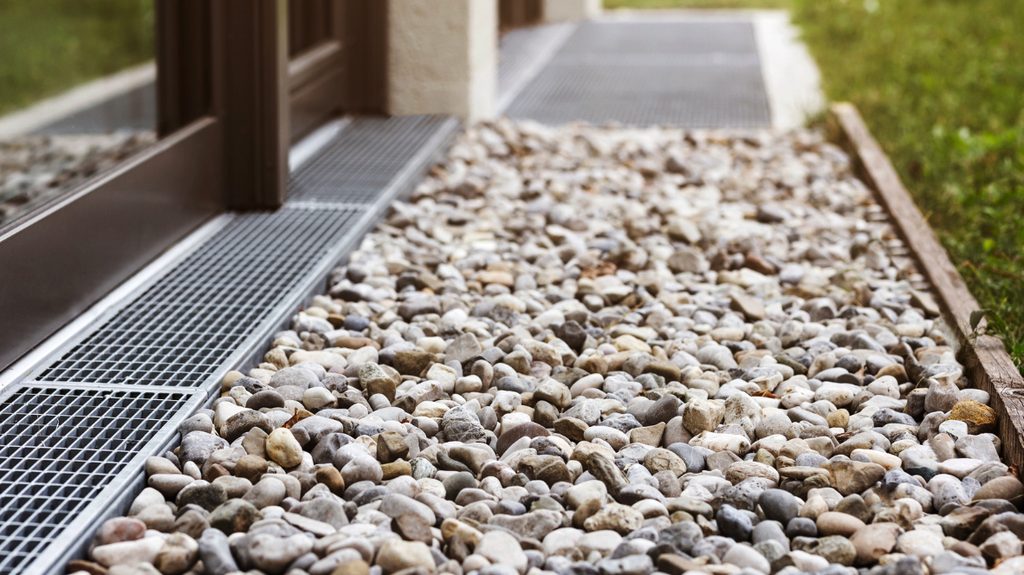
A typical French drain consists of a perforated drainage pipe installed inside a gravel-filled trench. Water enters the gravel and flows into the perforated pipe. The pipe then carries the collected water toward an appropriate drainage location.
The basic system usually includes:
- A carefully planned trench
- Drainage gravel
- A perforated drainage pipe
- Landscape fabric or another suitable separation material
- Proper slope
- A suitable outlet or drainage area
While the concept is relatively simple, proper planning and installation are important. The system needs to be designed around the property’s elevation, soil conditions, water flow, existing landscaping, and available drainage outlet.
When Do You Need a French Drain?
Not every wet area requires a French drain. However, recurring drainage problems may indicate that your property needs a dedicated drainage solution.
Some common signs include:
Standing Water
If water remains in your yard long after rainfall, the soil may not be draining properly.
Occasional puddles after a heavy storm may be normal. However, if the same areas repeatedly collect water, a drainage system may help redirect it.
Constantly Wet or Muddy Areas
A section of lawn that remains muddy or saturated can make it difficult to maintain healthy grass.
It can also make the area unpleasant to walk across and may eventually damage your landscaping.
Water Flowing Toward Your Home
Water that naturally flows toward your foundation can become a serious concern.
A drainage system can sometimes be designed to intercept water before it reaches the house and redirect it toward a suitable outlet.
Erosion
Heavy water flow can wash away soil, mulch, and landscaping materials.
If you notice channels forming in your lawn or soil collecting at the bottom of a slope, uncontrolled runoff may be contributing to the problem.
Wet Slopes
Properties with elevation changes can experience significant water movement during storms.
A French drain can potentially intercept water moving downhill before it reaches lower areas of the property.
French Drain Installation in Cranberry Township
Cranberry Township properties can experience a variety of drainage challenges due to different lot sizes, landscaping designs, soil conditions, slopes, and newer or established residential developments.
Homeowners looking for French drain installation in Cranberry Township may be dealing with standing water, soggy lawns, water near patios, basement concerns, or runoff moving across their property.
Areas throughout Cranberry Township, including communities near The Streets of Cranberry, Cranberry Highlands, and other residential neighborhoods, feature a variety of landscape designs.
A French drain can be incorporated into a larger drainage or landscaping project depending on the property’s needs.
For example, a drainage system might be used to intercept water moving toward a patio or to redirect water away from a low section of lawn.
The correct solution depends on where the water is coming from and where it needs to go.
French Drain Installation in Butler County
Drainage problems aren’t limited to Cranberry Township.
Homeowners throughout Butler County may experience water-related issues caused by heavy rainfall, natural slopes, compacted soil, poor drainage areas, or changes made to the landscape.
Communities such as Butler, Mars, Seven Fields, Zelienople, Evans City, and Valencia have a mixture of residential properties where drainage requirements can vary significantly.
If you’re searching for French drain installation in Butler County, it’s important to evaluate the entire flow of water across the property rather than simply installing a drain in the wettest area.
A professional drainage assessment can help determine:
- Where the water originates
- Where it naturally travels
- Where it collects
- Whether the soil is absorbing water properly
- Where the water can safely be redirected
This helps create a drainage solution designed for the property rather than a generic installation.
French Drain Installation in Beaver County
Beaver County homeowners can also face drainage challenges around lawns, gardens, foundations, patios, driveways, and sloped properties.
Communities including Beaver, Brighton Township, Center Township, Chippewa Township, Hopewell Township, Aliquippa, and Ambridge contain a variety of residential properties and landscapes.
For homeowners considering French drain installation in Beaver County, identifying the source and direction of water is an important first step.
A French drain may be appropriate for collecting groundwater or runoff from a particular area, but the drainage system needs a suitable place to discharge the collected water.
Simply moving water from one problem area to another isn’t an effective drainage strategy.
French Drain Installation in Allegheny County
Allegheny County contains properties ranging from urban homes and established neighborhoods to larger suburban lots.
Drainage challenges can therefore look very different from one property to another.
Homeowners searching for French drain installation in Allegheny County may be dealing with wet lawns, hillside runoff, water around landscaping, erosion, or drainage problems near outdoor living areas.
Communities such as Pittsburgh, Wexford, Sewickley, McCandless, Bethel Park, and Mt. Lebanon contain a wide range of residential landscapes.
On properties with significant elevation changes, controlling water movement can be particularly important.
A properly designed drainage system can help intercept water before it reaches areas where it causes damage or makes the landscape difficult to use.
How Does a French Drain Work?
The basic principle behind a French drain is simple: give water a controlled path to travel through.
A typical installation begins with a trench in the area where water needs to be collected.
The trench is prepared and filled with appropriate drainage materials. A perforated pipe is positioned inside the trench, allowing water to enter the pipe through openings.
Water then travels through the pipe toward the designated outlet.
The surrounding gravel allows water to move through the system while helping prevent the trench from becoming compacted with soil.
The exact installation method can vary depending on the property’s drainage conditions and the type of system being constructed.
Why Proper Slope Matters
One of the most important considerations when installing a French drain is water flow.
The drainage system needs to be designed so that collected water can move toward its intended outlet.
The property’s natural elevation plays an important role.
Before installation, it’s important to understand:
- High points
- Low points
- Natural water flow
- Existing drainage systems
- Foundation locations
- Property boundaries
- Potential discharge locations
Without proper planning, a French drain may not perform as intended.
French Drains and Heavy Pennsylvania Rain
Western Pennsylvania properties can experience periods of heavy rainfall throughout the year.
When the ground becomes saturated, additional rainwater may have nowhere to go.
This can result in:
- Flooded lawn areas
- Mud
- Erosion
- Waterlogged plants
- Standing water
- Runoff across patios
- Drainage around foundations
A well-planned drainage system can help manage excess water before it becomes a recurring landscaping problem.
However, a French drain isn’t designed to solve every drainage issue. In some situations, other solutions may be more appropriate.
French Drain vs. Other Drainage Solutions
Different drainage problems require different approaches.
French Drains
French drains are commonly used to collect and redirect groundwater or water moving through a landscape.
They can be particularly useful for wet areas and properties with water moving underground or across the surface.
Catch Basins
Catch basins are designed to collect surface water.
They can be useful in areas where water collects in a low point, such as near patios, driveways, or other hard surfaces.
Downspout Drainage
Roof runoff can create significant water problems if downspouts discharge directly next to the house.
A dedicated drainage system can redirect downspout water away from the foundation.
Grading
Sometimes the most effective solution is changing the slope of the landscape.
Proper grading can encourage water to flow away from structures and toward an appropriate drainage area.
Dry Wells
In suitable conditions, a dry well can provide a location for collected water to disperse into the surrounding ground.
Whether this is appropriate depends on local conditions, soil, available space, and applicable requirements.
A professional evaluation can help determine which combination of drainage solutions makes the most sense.
Can a French Drain Help Protect Your Landscaping?
Yes, when properly designed for the drainage problem.
Excess water can negatively affect lawns, plants, mulch, gardens, and hardscaping.
Constantly wet soil can also make it difficult to maintain healthy turf.
By directing excess water away from problem areas, drainage improvements can help create a more manageable landscape.
French drains can also be incorporated into larger landscaping projects.
For example, if you’re installing a new patio, retaining wall, or garden area, drainage should be considered as part of the overall design.
French Drains Around Patios and Outdoor Living Areas
Patios are a major part of many Pennsylvania landscapes.
However, water can become a problem when runoff from surrounding areas flows toward the patio.
Depending on the property, drainage may need to be incorporated around the perimeter or in nearby landscape areas.
A French drain may be part of the solution when groundwater or landscape runoff is contributing to the problem.
Proper drainage can help keep outdoor living areas more comfortable and reduce the chance of water collecting around hardscaping.
French Drain Maintenance
One advantage of a properly installed drainage system is that it generally requires less maintenance than many landscaping features.
However, no drainage system should simply be forgotten.
Homeowners should periodically check for:
- Blocked outlets
- Soil or debris buildup
- Excessive sediment
- Damaged drainage components
- New areas of standing water
- Changes in water flow
Landscaping also changes over time. Trees grow, gardens expand, patios are added, and grading can change.
A drainage system that worked perfectly when originally installed may eventually need maintenance or modification if the landscape changes significantly.
Should You Install a French Drain Yourself?
Small drainage projects may look straightforward, but larger installations can involve significant excavation and planning.
The biggest challenge isn’t necessarily digging the trench. It’s determining where the water should go.
A poorly planned system can fail to address the original problem or create drainage issues elsewhere.
Before installing a French drain, consider:
- Where is the water coming from?
- Where does it naturally flow?
- Where does it collect?
- What type of soil is present?
- What is the property’s elevation?
- Where can the water safely discharge?
- Are there existing underground utilities?
- Will the drainage system affect neighboring properties?
For larger residential drainage projects, professional installation can help ensure the system is designed around the actual conditions of the property.
Choosing a French Drain Contractor
When choosing a contractor for a drainage project, look beyond simply getting the lowest installation price.
A good contractor should understand both landscaping and drainage.
Ask about:
- The cause of your drainage problem
- The proposed drainage solution
- Where collected water will go
- Materials being used
- How the landscape will be restored
- Whether grading or additional drainage is needed
- The expected maintenance requirements
The right contractor should be able to explain the drainage plan clearly rather than simply recommending a French drain for every wet area.
Professional French Drain Installation in Western Pennsylvania
Drainage problems can make it difficult to enjoy your property and may contribute to ongoing landscaping issues.
Whether you’re dealing with standing water in the lawn, runoff from a slope, wet areas around a patio, or water moving toward your home, the first step is understanding the source of the problem.
For homeowners looking for French drain installation in Cranberry Township, French drain installation in Butler County, French drain installation in Beaver County, or French drain installation in Allegheny County, GNT Landscaping can help evaluate your landscape and determine an appropriate drainage solution.
From Cranberry Township and Mars to communities throughout Beaver and Allegheny counties, every property has different drainage conditions.
A properly designed drainage system should work with the natural characteristics of your property—not against them.
Get Your Drainage Problem Under Control
Recurring standing water doesn’t have to be a permanent part of your landscape.
A properly planned French drain or other drainage solution can help redirect excess water, protect your landscaping, improve lawn conditions, and make your outdoor space more usable.
If your property has drainage problems, contact GNT Landscaping for a professional assessment and discuss the best solution for your landscape.
Serving Cranberry Township, Butler County, Beaver County, Allegheny County, and surrounding Western Pennsylvania communities.